
Instructional Design
Mental Health Careers Academy Mentor Onboarding
Business Unit: Southwest Idaho Area Health Education Center
Design Type: One-hour VILT session and supplemental performance support tools
Background
The Southwest Idaho AHEC is developing the Mental Health Careers Academy (MHCA), a 14-month pilot program for 11th and 12th graders in Valley County, Idaho. Valley County is a rural community of approximately 13,000 residents with limited access to behavioral health services. Idaho ranks 50th in the nation for primary care providers per capita, and the MHCA was created to address this gap by exposing high school students to mental health disorders, treatment, wellness, and careers.
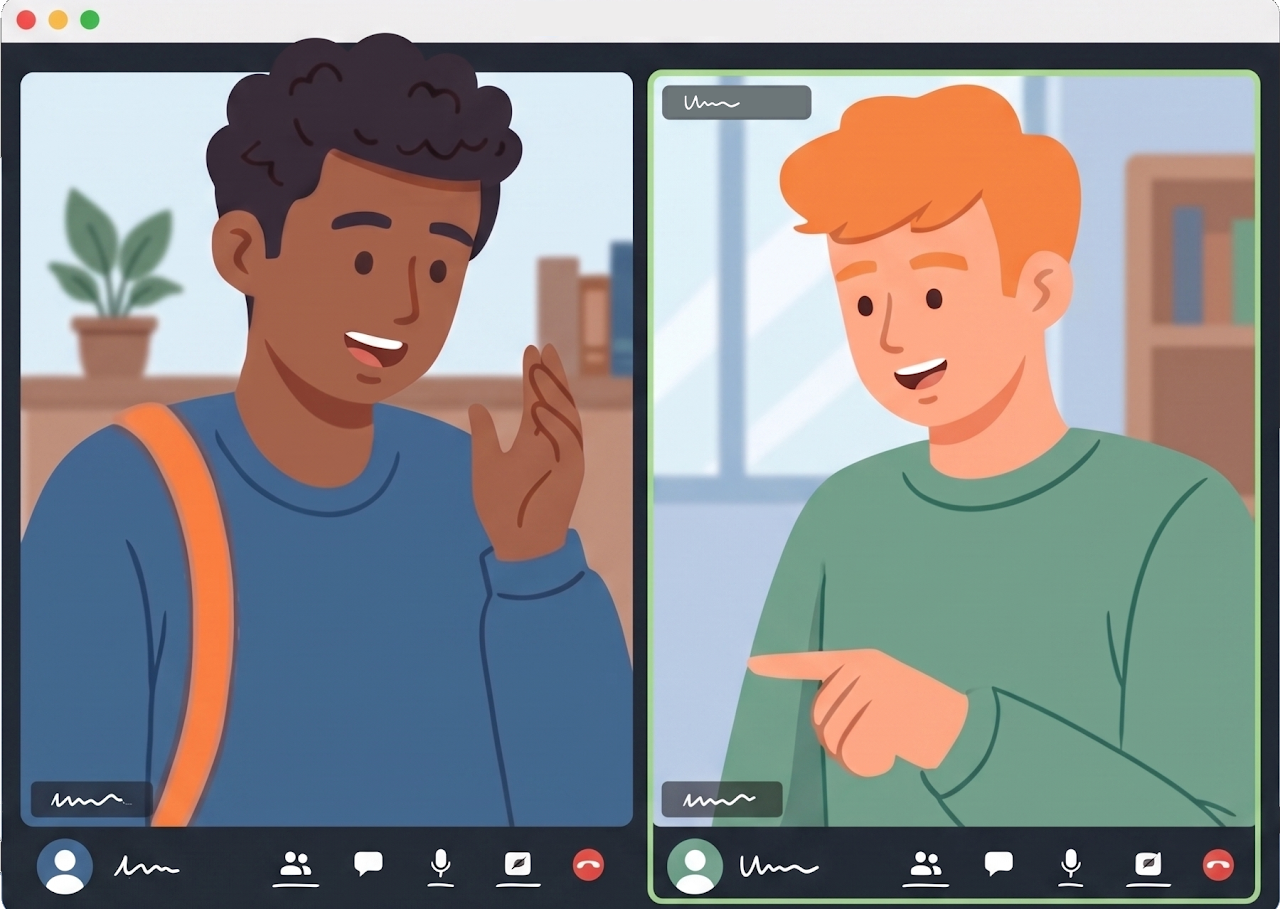
The program pairs each high school participant with a near-peer mentor (a college student currently enrolled in a behavioral health degree program, such as social work or psychology at Boise State). These mentors meet with their mentees virtually throughout the program. This includes meeting:
Weekly during a five-week summer course
Monthly during the school year
Through a work-based learning experience the following summer
Developmental Challenge
Because the mentor role was brand new, no onboarding process, documented expectations, or support infrastructure existed. Mentors would work with minors in a mental health education environment, a context that required clarity around professional boundaries, escalation protocols, and virtual engagement skills. The gap between the mentors' academic background and what the role required was program-specific: boundary management, communication expectations, and judgment around when to support versus when to escalate concerns to the MHCA instructor.
Analysis
My team conducted learner, environmental, task, and role analyses using stakeholder interviews and a design checklist based on Chevalier's version of the Behavior Engineering Model. Key findings included:
Mentors are undergraduate behavioral health students at Boise State University with some experience working with younger students, but no prior exposure to the specific protocols, boundaries, or escalation procedures required by this program.
Training would be delivered synchronously via Zoom with no learning management system available. All resources would need to be distributed through email or during the session itself.
The mentoring context involved working virtually with minors who are studying sensitive mental health topics, creating a heightened need for clear role boundaries and a reliable escalation pathway.
Training Requirements, Learner, Environment, & Task Analyses
Methodology
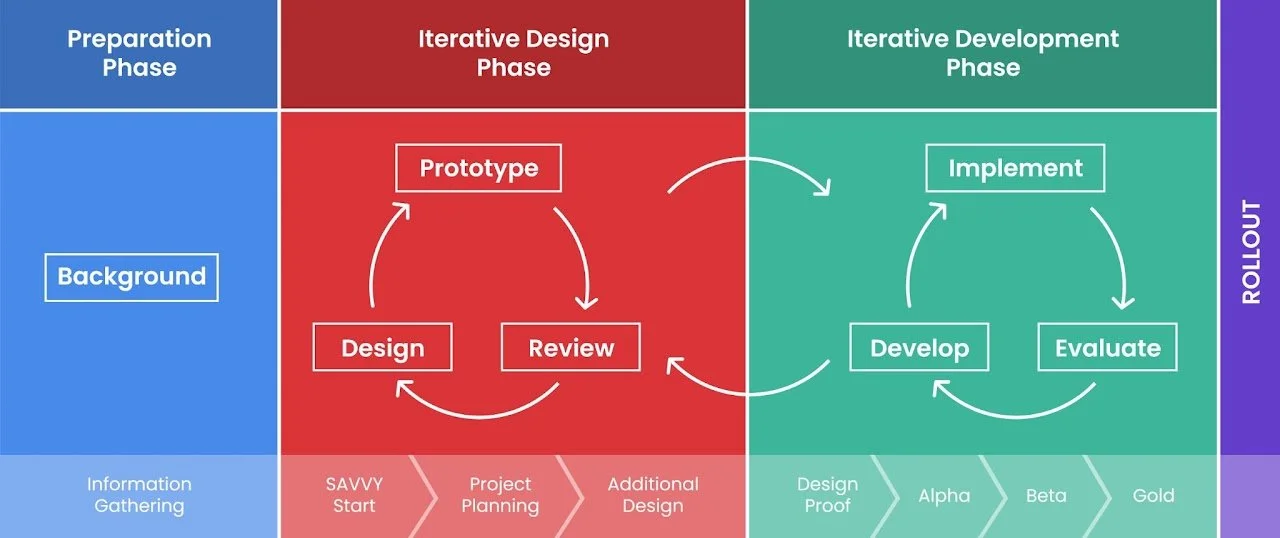
My team used the Successive Approximation Model (SAM) to iteratively design, evaluate, and refine the training materials through feedback from the client. Within that iterative process, the team utilized the Dick and Carey Model's approach of developing the performance assessment before the instructional content. This allowed the team to validate content against an evaluation instrument that was built directly from the performance objectives, ensuring that every element of the training was aligned to what mentors would actually need to demonstrate.

Performance Objectives
My team used Robert Mager's (1997) method for developing performance objectives, including the required elements of performance, conditions, and criteria.
After completing the onboarding session, mentors will be able to:
Describe the mentor role and distinguish it from other support roles such as clinician, social worker, therapist, or friend.
Apply the program's communication and boundary expectations as defined in the Mentor Guidebook.
Demonstrate at least one active listening or open-ended questioning technique appropriate for virtual mentoring with a high school student.
Determine whether a mentee disclosure or behavioral change requires mentor support or escalation to the MHCA instructor.
Locate and implement the appropriate response using the performance support tools provided.
Deliverables
Lesson Plan and Instructional Materials (60 minutes)
The onboarding session uses a high-facilitation, scenario-based instructional approach delivered virtually via Zoom.
Performance Assessment
The post-onboarding assessment includes five components aligned to the session's objectives: a role boundary quiz, a support-versus-escalation scenario, a boundary expectations scenario, an active listening and open-ended questioning reflection, and a performance support tool navigation task.
Mentor Guidebook
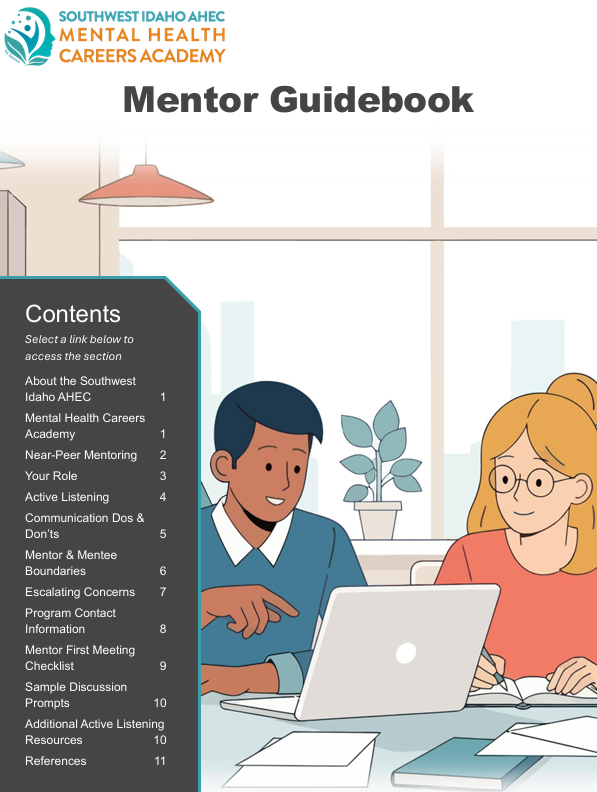
The digital Mentor Guidebook serves as both a training reference and an ongoing performance support tool. It covers the AHEC and MHCA program context, the research basis for near-peer mentoring, role clarity (what a mentor is and is not), mentor and mentee boundaries, communication dos and don'ts, escalation pathways, program contact information, and additional resources.
Applied Theories
A primary goal of the design was to reduce cognitive load caused by the large volume of critical content required for a near-peer mentoring program. Our design focus was to instruct mentors on the most critical content, and then locate other content in the performance support tools. Following Sentz's (2021) guidance on visual and graphic elements, the Mentor Guidebook and slide deck use images to reinforce key textual concepts and a graphic to show the relationships between escalation decisions and contacts. These choices are designed to manage cognitive load by utilizing dual-coding of the content.
During the orientation itself, the program followed Gagné's Nine Events of Instruction by:
Opening with the health provider shortage in Idaho to gain attention.
Previewing the performance objectives.
Presenting content in short chunks that pair visuals with text.
Eliciting performance through a breakout scenario with a debrief.
Closing with a guidebook scavenger hunt that simulates using the tool while mentoring.
The team applied Design Thinking to create materials that were intuitive and learner-centered by developing learner personas and designing for the potential needs of those learners. The team drew on McDonald's principles of holistic learning environment design to ensure the deliverables functioned as a coherent whole. The lesson plan, performance assessment, and Mentor Guidebook were intentionally connected so that the same content appears in each, structured so that mentors encounter it during onboarding, and then return to it as a performance support tool during real mentoring interactions.
In addition, the guidebook was designed to be aesthetically accessible, easy to navigate through embedded links, and built in Microsoft Word so that the AHEC could update it without specialized software.
Reflection
Our core challenge on the mentor onboarding project was its constraints. The mentor role has critical stakes (undergraduates exercising professional judgment with minors discussing sensitive mental health topics), the virtual onboarding is only 60 minutes, and the program is for a nonprofit that uses grant funding. Those constraints shaped our design in several ways, from what was prioritized in training, what was included in the performance support tools, and how those tools were designed.
Our team made several decisions that maximized the impact of the design.
Assessment before content. By building the performance assessment first, the team ensured that the lesson plan addressed exactly what mentors would need to demonstrate. It also kept the 60-minute session focused on changing performance rather than simply knowledge transfer.
Scenario-based practice. Given the limited time and the relational nature of the mentor role, the session prioritizes applied decision-making practice. Mentors analyze realistic scenarios involving mentee disclosures, behavioral changes, and boundary challenges rather than listening to lectures about policy.
Learner-centered design. The Mentor Guidebook was designed to be used during and after training as an active resource. Its design as an electronic document with a linked TOC allows easy-to-follow support during the onboarding session, while also acting as a real-time reference during actual mentoring interactions. The design is fully accessible, using appropriate high-contrast colors, headings, and alt text. The design also considered the non-profit status of the program, and it was built in Word to ensure the AHEC can maintain and update it as the program evolves.
Together, these decisions reinforced a principle I will carry forward in my career: integrating constraints into the design is what maximizes a project's impact.
References
Chevalier, R. (2008). The evolution of a performance analysis job aid. Performance Improvement, 47(10), 9–18.
Gronseth, S. L., Michela, E., & Ugwu, L. O. (2021). Designing for Diverse Learners. In McDonald, J. K. & West, R. E. (Eds.), Design for Learning: Principles, Processes, and Praxis (pp. 21-39). EdTech Books. https://edtechbooks.org/id/designing_for_diverse_learners
Hill, S., Ward, W., Seay, A., & Buzenski, J. (2022). The nature and evolution of the mentoring relationship in academic health centers. Journal of Clinical Psychology in Medical Settings, 29(3), 557–569.
Honebein, P. C. & Reigeluth, C. M. (2021). Making Good Design Judgments via the Instructional Theory Framework. In McDonald, J. K. & West, R. E. (Eds.), Design for Learning: Principles, Processes, and Praxis (pp. 231-245). EdTech Books. https://edtechbooks.org/id/making_good_design
Kupersmidt, J. B., Stelter, R. L., & Rhodes, J. E. (2020). Peer mentoring supplement to the Elements of Effective Practice for Mentoring. MENTOR/National Mentoring Partnership.
Mager, R. (1997). Preparing instructional objectives: A critical tool in the development of effective instruction (3rd ed.). Atlanta, GA: CEP Press.
McCallen, L., Yazdani, N., Pai, G., Bloom, J., Chajet, L., & Fine, M. (2023). How a community engagement model of near-peer counseling impacts student mentors' college outcomes. Journal of Higher Education Outreach and Engagement, 27(2).
McDonald, J. K. (2021). The Design of Holistic Learning Environments. In McDonald, J. K. & West, R. E. (Eds.), Design for Learning: Principles, Processes, and Praxis. EdTech Books. https://edtechbooks.org/id/the_design_of_holistic
Sentz, J. (2021). Using Visual and Graphic Elements While Designing Instructional Activities. In McDonald, J. K. & West, R. E. (Eds.), Design for Learning: Principles, Processes, and Praxis. EdTech Books. https://edtechbooks.org/id/using_visual_and_graphic_elements
Stefaniak, J. E. (2024). Using Task Analysis to Inform Instructional Design. In McDonald, J. K. & West, R. E. (Eds.), Design for Learning: Principles, Processes, and Praxis (pp. 91-109). EdTech Books. https://edtechbooks.org/id/task_and_content_analysis
Svihla, V. (2021). Design Thinking. In McDonald, J. K. & West, R. E. (Eds.), Design for Learning: Principles, Processes, and Praxis (pp. 277-289). EdTech Books. https://edtechbooks.org/id/design_thinking
Weinstein, Y., Sumeracki, M., & Caviglioli, O. (2019). Understanding how we learn: A visual guide. Routledge.
What are the core instructional design models?. (n.d.). Digital Learning Institute. https://www.digitallearninginstitute.com/blog/what-are-the-core-instructional-design-models